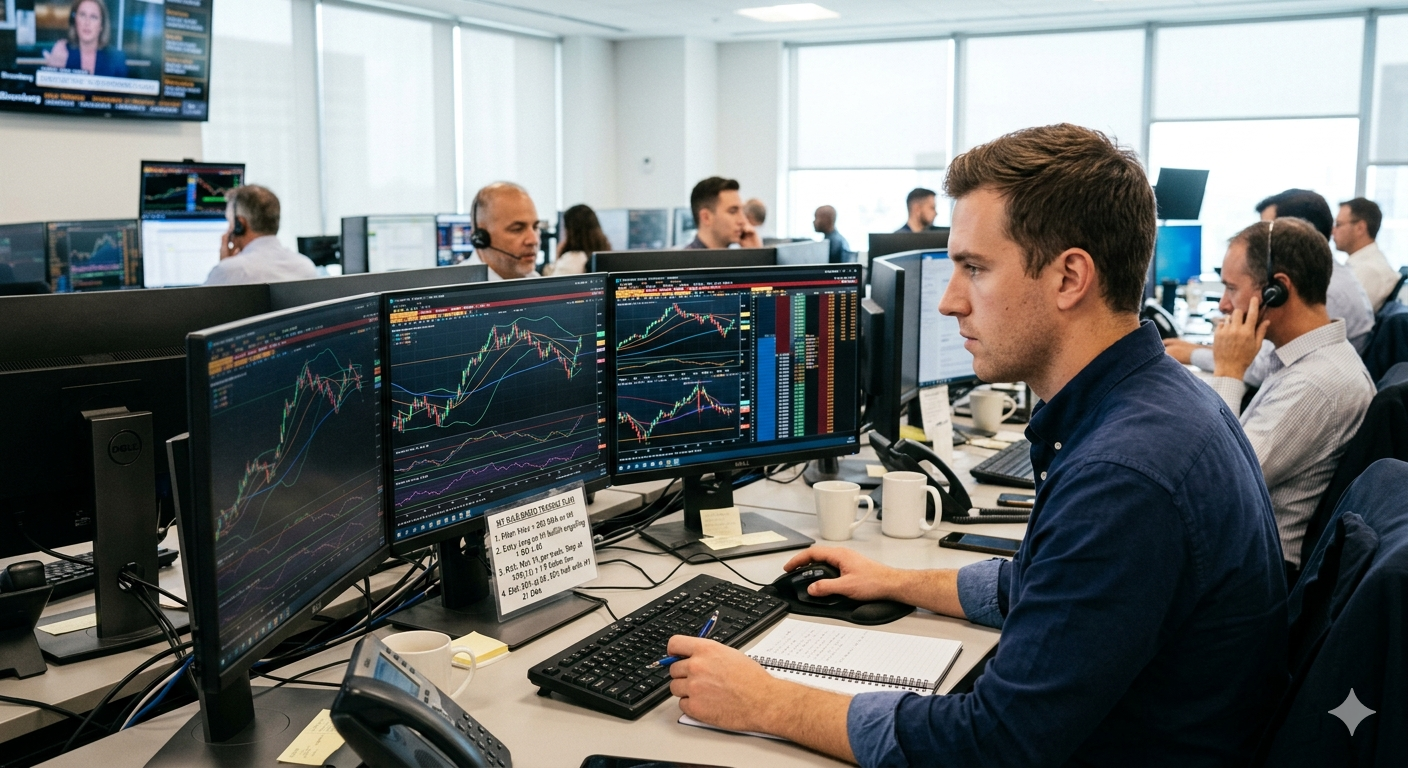
Session overlaps shape trading opportunities in ways that many newcomers overlook when they begin researching how to trade forex, since liquidity and volatility shift dramatically depending on which financial centers are active at any given hour. The currency market operates continuously on weekdays, passing activity from Sydney and Tokyo to London and then New York. Bangladeshi traders who check charts at random times, with no structural knowledge of session timing, miss the predictable rhythm around which experienced participants structure their routines.
For Bangladeshi traders, the Asian session runs from early morning through mid-afternoon local time, which places much of it inside the standard working day. Traders with daytime jobs can often monitor only the opening hours before work, and those hours still offer a useful window for yen crosses and Australian dollar pairs, which typically see their most significant activity during this period. Dollar pairs often trade in narrow ranges during these hours until London liquidity arrives. Realizing which pairs move in hours that traders can realistically watch allows them to build a sustainable routine based on personal availability.
The London open arrives in the early afternoon in Bangladesh, around one or two in the afternoon depending on daylight saving time in the United Kingdom, and it brings a volatility shift that new currency traders learn to anticipate. Fading Asian activity combined with rising European participation often produces some of the sharpest intraday moves in major pairs. Bangladeshi traders able to watch the early-afternoon hours experience a marked change in liquidity, and this volatility exposes poor position sizing quickly. Building a routine that accounts for this shift helps traders calibrate expectations for each window of the day.
The London and New York overlap is the most liquid window of the trading day, concentrating the heaviest trading volume into a few hours. In Bangladesh, this overlap falls in the evening, roughly from six to ten or from seven to eleven depending on daylight saving time in the United States and the United Kingdom, which makes it the most accessible high-liquidity window for traders with daytime jobs. The late New York session and major scheduled announcements, such as U.S. Federal Reserve rate decisions arrive around midnight or later, and few traders can monitor these hours consistently without sacrificing sleep in ways that eventually undermine decision quality. This limitation forces many to use orders in place and to set risk limits in the wee hours of the nite. Honest assessment of these limits supports sustainable results; schedules that sacrifice sleep are often unsustainable within weeks.
Session-based routines also depend on knowledge of the economic calendar, as major data releases cluster around particular session openings. European releases typically arrive in the Bangladeshi afternoon, and major U.S. data releases arrive in the evening, so traders focused on the Asian session need to account for events that affect positions later in the day, even when they are away from the screen. Awareness of these layers, combining session rhythm with scheduled events, gives a routine genuine structure. Weekly rhythm adds a further dimension to the daily session cycle. Monday openings often reflect the market digesting weekend news, and Friday afternoons frequently see reduced conviction as participants close positions before the weekend. Traders who are learning how to trade forex tend to have expectations that are consistent across each weekday, and they fail to take into account the ways in which weekly patterns interact with the behavior of daily sessions. Including this rhythm provides a routine context that session timing alone cannot capture.
The evening overlap provides a natural anchor to a routine for Bangladeshi traders, with the London afternoon open and early Asian hours providing supporting windows when their schedules allow them to do so. By matching the nature of each session to the hours available, traders can focus on the times when opportunity is concentrated. Consistency in timing is equivalent to consistency in habits.